

Piling works
Piling works are foundational construction techniques used to support structures, stabilize soil, and transfer loads to deeper, more stable layers of soil or rock. Here's a brief outline of the process:
Site Investigation: Before piling begins, the site is assessed to determine soil conditions, groundwater levels, and load requirements. This helps in selecting the appropriate piling method and design.
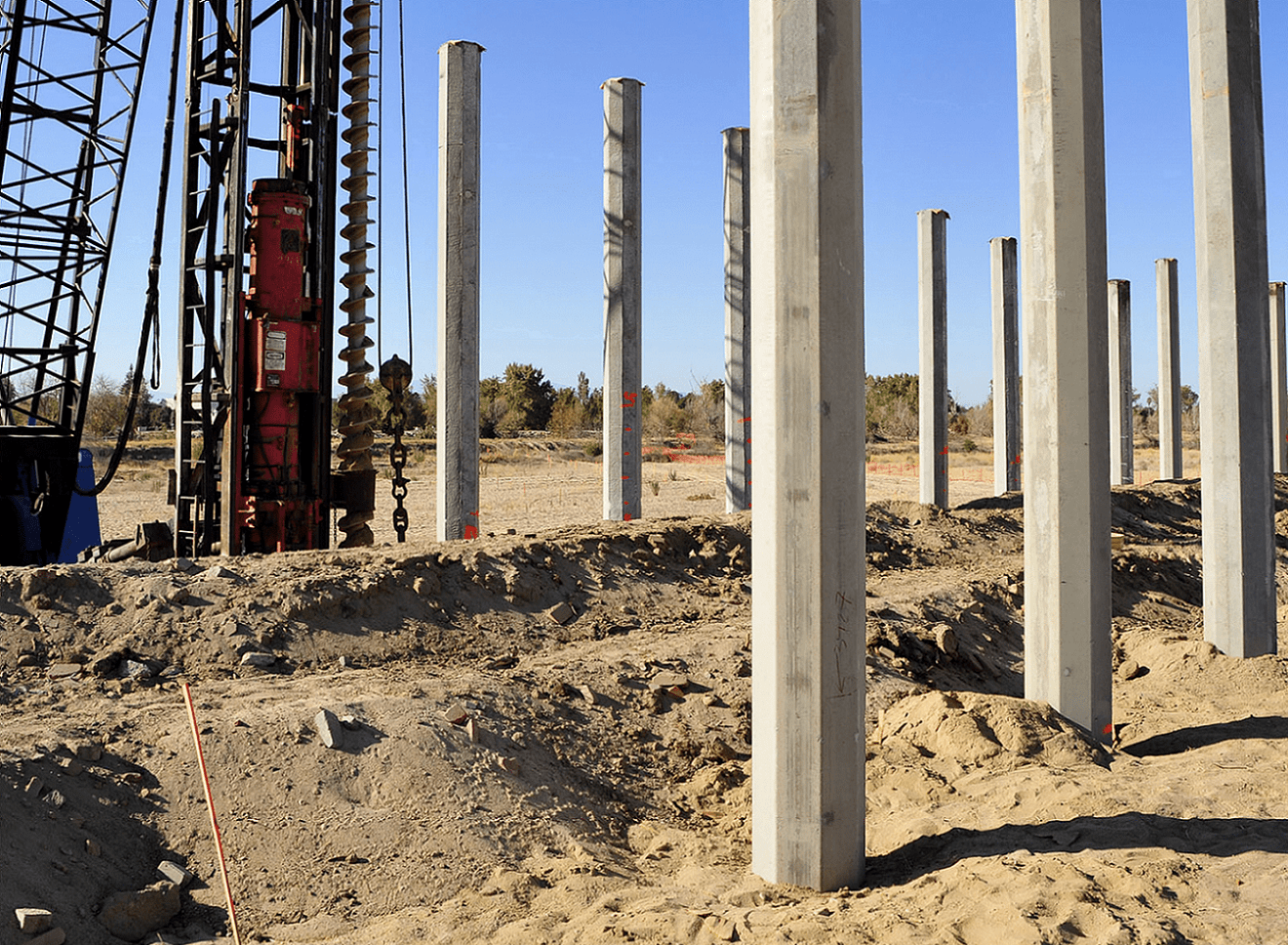
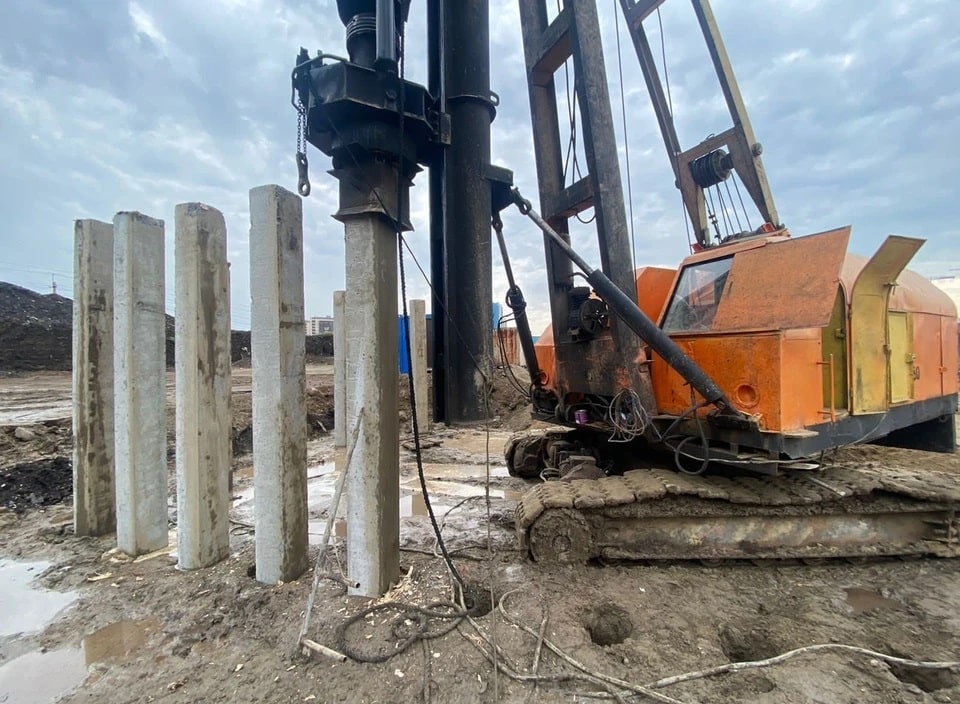
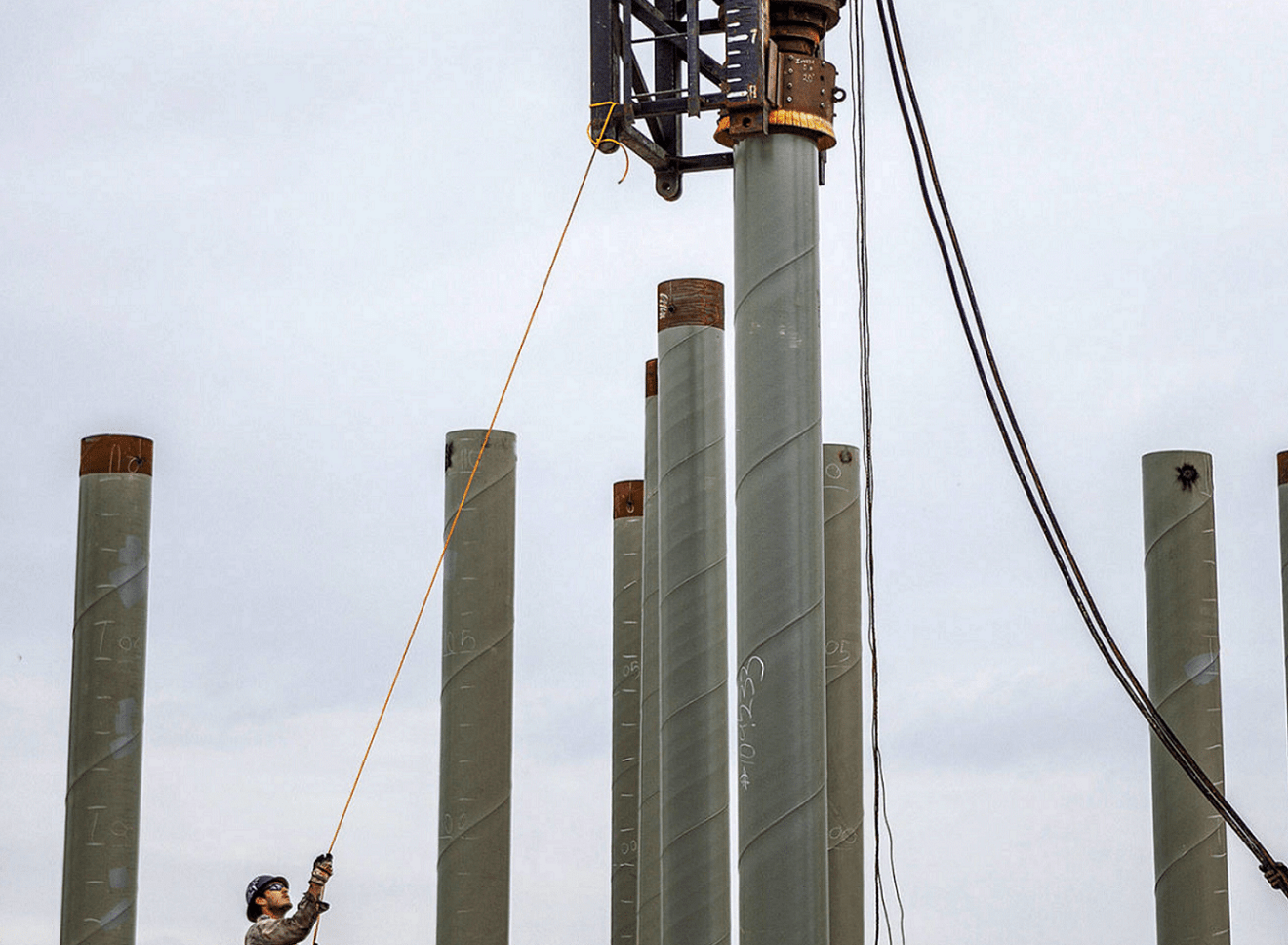
Pile Installation: Piles, typically made of concrete, steel, or timber, are driven, drilled, or vibrated into the ground to the desired depth. This creates a stable foundation capable of supporting the intended structure's weight.
Types of Piles: Different types of piles are used depending on the soil conditions and project requirements. Common types include driven piles (such as H-piles and pipe piles), drilled piles (such as bored piles and auger cast piles), and helical piles.
Installation Methods: Piles can be installed using various methods, including impact driving, rotary drilling, hydraulic pressing, and screwing. The method chosen depends on factors such as soil type, accessibility, and environmental constraints.
Load Testing: After installation, piles may undergo load testing to ensure they meet design requirements and performance standards. This involves applying simulated loads to the piles and measuring their response under different conditions.
Integration with Superstructure: Once installed and tested, piles are integrated with the superstructure of the building or structure. This may involve connecting piles to pile caps, footings, or other structural elements to distribute loads evenly and provide stability.
Piling works are essential in construction projects ranging from buildings and bridges to offshore platforms and retaining walls, providing a solid foundation for structures in various soil and environmental conditions.
"PROJECT BUILDING CONSTRUCTION" was allowed to carry out piling works on the basis of the license issued by the Ministry of Economy of the Republic of Azerbaijan under the registration number EL-627/2019 on November 1, 2019.
Our Work Process

Research & Analysis

Architecture & Design

Execution & Authorship Control